
By: Jeremy Bochniak
San Marcos – Injuries are a part of sports, and rehab can be one of the most mentally tasking challenges that any athlete can handle.
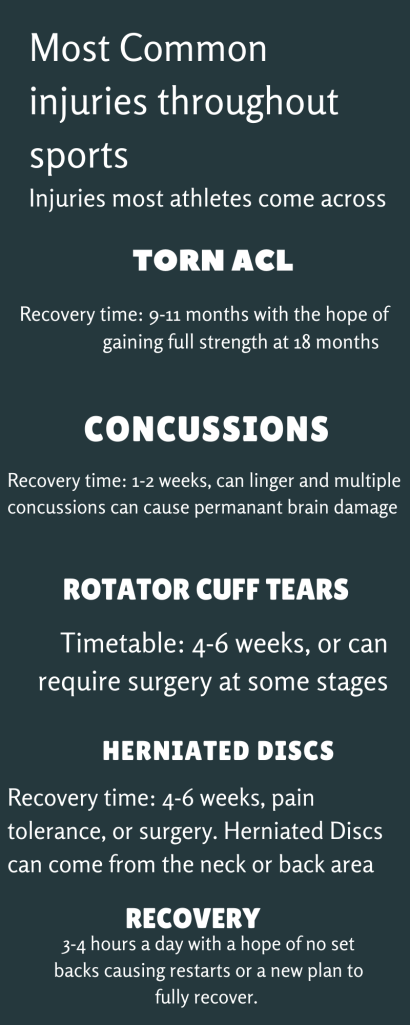
There are 8.6 million sports-related injuries occur every year, with 41 percent resulting in sprains, 20 percent in broken bones, and 19 percent in superficial injuries.
Getting injured, however, can change how you view playing a sport, and the mental strain of trying to rehab a part of your body to get it to full strength again can be overwhelming.
Jordan Brown, a recent Texas State graduate who majored in physical therapy, said being honest with the injury and the process ahead is essential.
“Athletes coming back mentally is tough,” Brown said. “You need to be honest with yourself and understand rehab isn’t easy. That’s our job too. As a Physical/Occupational/Recreational therapist, our treatment is reassurance, trust, and open communication.”
James Barrows was a starting high-school running back when he tore his ACL late sophomore year stepping in a dead spot on the football field.
“It was in spring football, we were running plays against practice squad, and when I got the ball, there happened to be a pothole from track and field season,” Barrows said. “I had stepped in the pothole, my knee buckled in and out, and I tore my ACL.”
Barrows needed surgery and his recovery time was nine months, although he says he truly didn’t feel 100 percent until 12 months after surgery. The rehabilitation process was long and frustrating for Barrows, such as learning to walk again.
“Something you could do completely fine, is something you’re re-learning again,” Barrows said.
Ruchir Narula tore his meniscus while playing pick-up basketball in November 2017. He had no dreams of becoming a professional athlete, but he loves the game and competition of basketball.
“Playing on a outdoor court, you’re prone to a lot of injuries,” Narula said. “I twisted one way, I heard a pop, and I couldn’t feel my knee. I couldn’t put weight on it. I knew something was up, I had trouble walking back to my car.”
Narula opted for surgery instead of rehab, with the procedure being performed in January 2018.
“That January, I actually started my first semester at (UTSA) so I had to miss a few classes,” Narula said. “It was hard to walk, hard to get around. I couldn’t play basketball obviously. The removal of things I really liked to do was the hardest part.”
Brown emphasizes that trusting the process is important when it comes to rehab. “Trust the process,” Brown said. “The rehab process will be slow but understand two things… First, these doctors are highly skilled at what they do. Medicine is their form of art just as sport is the athlete’s form of art. Two, anything worth value doesn’t happen overnight.”
 JB Sports Talk